Can Copepods Remove Dinoflagellates in Reef Tanks?
Share
A brown, snotty film that traps bubbles and returns within hours can make even a well-kept reef feel out of control. Many hobbyists want to remove dinoflagellates with copepods because pods are a natural part of a mature reef food web. That instinct is right, but copepods are not a magic bottle fix. They are one useful piece of a recovery plan built around correct identification, stable nutrients, biodiversity, and patience.
Can You Remove Dinoflagellates With Copepods?
Sometimes, yes. More accurately, copepods can help a reef become less favorable to dinoflagellates while adding competition and grazing pressure to the system. Whether they directly eat enough dinos to make a visible difference depends on the dinoflagellate species, the pod species, available food, and the overall condition of the tank.
Some copepods will graze on certain small cells and the microbial film around them. Others spend more time on rockwork, sand, algae, detritus, and biofilm than actively targeting dinos. A healthy pod population also supports a broader microfauna community, and that diversity matters. Dinoflagellate outbreaks often gain ground when a tank has been stripped too clean, nutrients have bottomed out, or the food web has become thin.
What pods cannot do is overcome the conditions that caused the outbreak in the first place. If nitrate and phosphate are unreadably low, if the tank is receiving aggressive chemical filtration, or if the same sand bed is being repeatedly sterilized, a single pod addition will usually disappear into the problem instead of solving it.
Start by Confirming What You Are Fighting
Not every dusty brown coating is dinoflagellates. Diatoms, cyanobacteria, chrysophytes, and ordinary algae can look similar under tank lighting. The behavior is a clue: dinos often form stringy mats, produce trapped oxygen bubbles during the light cycle, and fade back overnight before returning the next day. But appearance alone is not enough for a treatment plan.
A basic microscope check is worth the effort. Different dino groups behave differently. Some stay mostly on surfaces, while others spend more time suspended in the water column. Some are more likely to be affected by UV treatment. Some can be highly irritating or toxic, especially species commonly associated with Ostreopsis-type outbreaks. If you suspect a toxic strain, avoid blowing mats around the tank, use gloves when cleaning, and keep aerosols out of your face.
Identification does not need to become a science project before you take action. It does mean you should avoid throwing every possible treatment at the aquarium at once. A reef that is battling dinos does not benefit from more chaos.
Why Copepods Help a Dinos Recovery Plan
Copepods work best as part of a rebuilt ecosystem, not as a one-time cleanup crew. A mixed population is usually more useful than relying on a single species because different pods occupy different areas of the aquarium. Some remain on the glass and rockwork, some move through the water column, and some work the sand and surface films.
This matters because a mature reef has many small consumers competing for the same microscopic resources. Pods, amphipods, worms, bacteria, ciliates, and other microfauna all make it harder for one opportunistic organism to dominate. Pods also become live nutrition for mandarins, wrasses, corals, and other reef animals. That is a real benefit, but it also means a pod population needs a chance to establish before heavy pod predators can wipe it out.
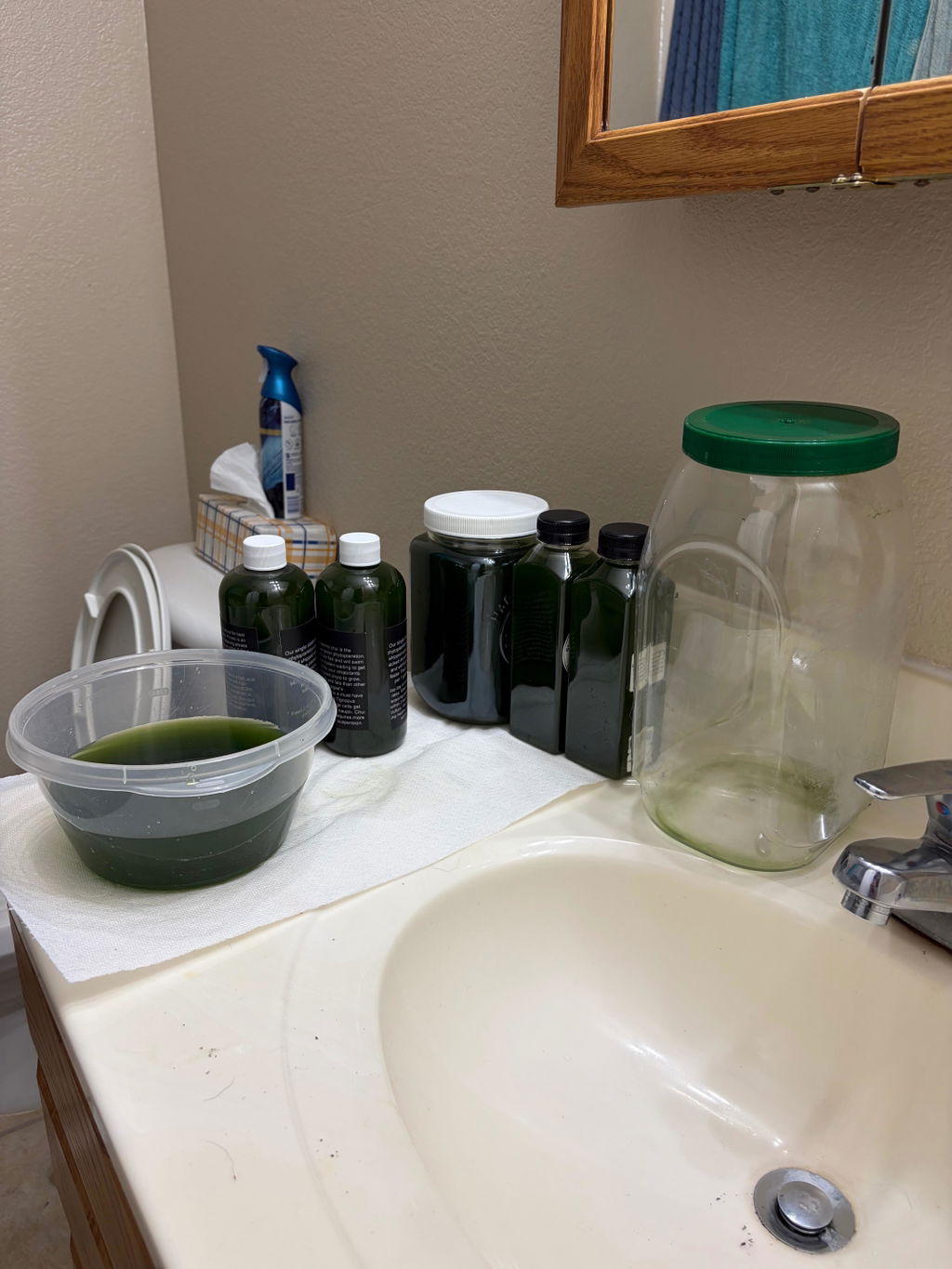
Live phytoplankton is often the missing partner in this approach. It provides a consistent food source for many filter-feeding microfauna and helps keep pod populations from crashing after introduction. The goal is not to dump in enough phyto to create another nutrient issue. The goal is to feed the food web consistently enough that it can stay alive and reproduce.
At Reef Legends, the focus is on dense live cultures and biodiversity for this exact reason: a reef recovers better with living nutrition and multiple useful organisms than with a single quick-fix product.
How to Add Copepods During a Dinos Outbreak
Timing and placement matter. Add pods after lights out, when fish are less active and pods have time to settle into rockwork, refugium media, crevices, and sand. Turn off mechanical filtration briefly if it will immediately capture the culture, but keep circulation and oxygenation stable. Do not shut down the entire tank for an extended period.
If your system has a refugium, dose a portion there and a portion into the display. The refugium can act as a breeding reserve, especially in a tank with wrasses, mandarins, dragonets, or other constant pod hunters. A pile of porous rubble, macroalgae, or protected media gives pods places to reproduce without being picked off instantly.
Use this practical sequence rather than expecting an overnight turnaround:
1. Test nitrate and phosphate with reliable kits. If both are bottomed out, reduce or pause the nutrient-stripping methods that got you there. Do not chase zero in a reef tank already showing dinos.
2. Add a diverse live copepod culture after dark, preferably in more than one area of the system. Give the tank places where pods can hide and reproduce.
3. Feed an appropriate amount of live phytoplankton regularly. Watch the tank response instead of assuming more is always better. The water should not become persistently cloudy or show a runaway nutrient increase.
4. Remove visible dino mats manually with a siphon. Exporting biomass is useful, especially when mats are thick enough to smother coral tissue, sand, or rock. Replace removed water with clean, temperature-matched saltwater.
5. Reassess after several days, then again after a couple of weeks. You are looking for reduced daily regrowth, less stringing, healthier biofilm, and visible pods on glass and rock after dark.
Keep Nutrients Detectable, Not Excessive
One of the most common dino stories goes like this: the aquarist works hard to lower nitrate and phosphate, the tank looks clean for a while, and then dinos take over. Corals, beneficial algae, and competing microbes need available nutrients too. A reading of zero is not automatically a sign of success.
There is no universal nitrate or phosphate number that prevents every dino outbreak. Stocking, coral demand, feeding habits, lighting, and filtration all change the target. The practical goal is stable, detectable nutrients that support coral color, normal film algae, and a functioning food web without fueling nuisance algae.
Avoid swinging from starvation to overfeeding. If nutrients are low, increase feeding carefully, consider reducing overly aggressive export, and test regularly. Slow corrections are easier on corals and less likely to trade dinos for a different nuisance problem.
What Else May Be Needed
Copepods are especially helpful in a low-biodiversity, low-nutrient system, but severe outbreaks can require additional tools. Water-column dinos may respond well to a properly sized UV sterilizer with appropriate flow. Surface-bound mats may benefit more from daily siphoning, adjusted nutrients, and biological competition. A short photoperiod reduction can provide relief in some cases, though it is not a substitute for fixing the underlying imbalance.
Be cautious with broad-spectrum treatments, repeated peroxide dosing, or drastic blackouts. These approaches may knock dinos back temporarily, but they can also damage the organisms you are trying to establish. If the tank rebounds into dinos a week later, the root issue was never addressed.
Also look at your feeding and maintenance routine. A tank with no fish food, no phyto, ultra-clean rock, aggressive skimming, phosphate media, and frequent deep cleaning may be maintained in a state that favors dinos. That does not mean you should stop maintaining the aquarium. It means maintenance should support a living reef ecosystem rather than continually reset it.
Give the Food Web Time to Respond
A successful pod addition is not always obvious the next morning. Copepods need habitat, food, and enough time to reproduce. Check the glass after dark with a flashlight. Tiny white specks moving in short bursts, pods crawling on the rock, and activity in the refugium are good signs that the population is settling in.
The best outcome is not simply that the brown strings disappear. It is a reef where corals are feeding, nutrients are steady, microfauna are visible, and dinos no longer have an empty niche to exploit. Build that kind of system, and copepods become more than a treatment attempt - they become part of the reason the outbreak is less likely to return.